

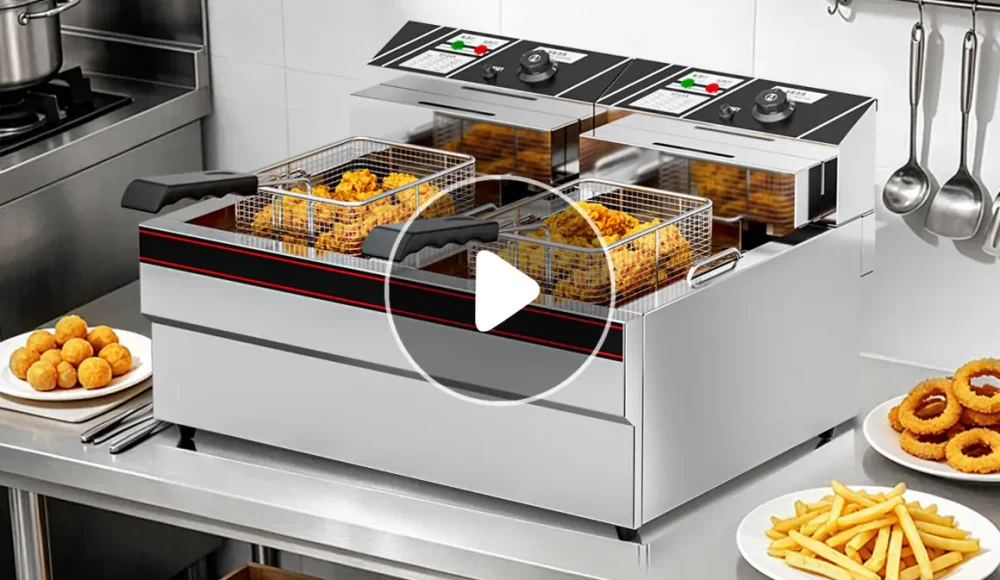
Why More Fish & Chips Restaurants Are Choosing Double Long Tank Electric Fryers?
Commercial frying operations often face a challenge that standard fryers were never designed to solve. Many restaurants serve products that are longer than a traditional fryer basket, including fish fillets, battered cod, tempura shrimp, spring rolls, churros, and chicken strips. When these foods are forced into a standard fryer, operators frequently encounter uneven cooking, broken coatings, inconsistent appearance, and slower production speeds.
A commercial double long tank electric fryer addresses these operational issues by combining an extended frying area with independent dual-tank functionality. The Shangbang EF010-B Series was developed for foodservice businesses that need higher throughput while maintaining consistent product quality throughout busy service periods.
What Makes a Double Long Tank Electric Fryer Different From Standard Fryers?
The most noticeable difference is the shape of the frying tank itself. A long tank design provides additional horizontal cooking space, allowing operators to fry larger food products without folding, overlapping, or crowding them inside the basket.This design becomes especially valuable in businesses where presentation directly impacts customer satisfaction.
Benefits include:
- More usable frying area
- Better product appearance
- Reduced food breakage
- Improved cooking consistency
- Faster batch production
- Better utilization of kitchen labor
For fish and chips restaurants, maintaining the shape and texture of fish fillets can be just as important as achieving the correct internal temperature.
Why Restaurants Need Independent Double Frying Tanks?
A dual-tank fryer provides operational flexibility that many restaurant operators underestimate until they experience peak service demand.Separate tanks allow different products to be cooked simultaneously without flavor transfer.
Examples include:
- Fish and French fries
- Chicken and seafood
- Vegetarian and meat products
- Spicy and non-spicy menu items
Independent temperature controls also allow each tank to operate according to the specific cooking requirements of different foods.This flexibility can help improve kitchen workflow while reducing waiting times during busy lunch and dinner services.
Commercial Fish Fryer Applications Beyond Fish & Chips
Although long tank fryers are commonly associated with fish and chips restaurants, their applications extend far beyond that segment.Many foodservice operators use long tank fryers for products such as:
Seafood Restaurants
- Whole fish fillets
- Squid strips
- Tempura shrimp
- Breaded seafood platters
Fast Food Chains
- Chicken tenders
- Mozzarella sticks
- Onion rings
- French fries
Catering Operations
- Large batch frying
- Event preparation
- Mobile catering kitchens
Convenience Food Manufacturers
- Frozen product testing
- Product development kitchens
- Demonstration kitchens
The versatility of a long tank fryer often makes it one of the most productive pieces of equipment in a commercial kitchen.
Stainless Steel Construction Built for Daily Commercial Use
The most noticeable difference is the shape of the frying tank itself. A long tank design provides additional horizontal cooking space, allowing operators to fry larger food products without folding, overlapping, or crowding them inside the basket.This design becomes especially valuable in businesses where presentation directly impacts customer satisfaction.
Benefits include:
- More usable frying area
- Better product appearance
- Reduced food breakage
- Improved cooking consistency
- Faster batch production
- Better utilization of kitchen labor
For fish and chips restaurants, maintaining the shape and texture of fish fillets can be just as important as achieving the correct internal temperature.
Why Fryer Recovery Time Impacts Restaurant Profitability?
Many buyers focus exclusively on tank capacity while overlooking heat recovery performance.Recovery time determines how quickly oil returns to the target temperature after food is added.
Poor recovery performance often leads to:
- Greasy food
- Uneven color
- Longer cooking cycles
- Lower customer satisfaction
Commercial kitchens operating during peak hours need equipment capable of maintaining stable frying temperatures across multiple cooking cycles.Efficient heating systems help operators maintain consistency while maximizing throughput.
Choosing the Right Electric Fryer Capacity for Your Business
Different business models require different fryer capacities.
Small Operations
Suitable for:
- Cafés
- Snack bars
- Small food kiosks
Priority:
- Space efficiency
- Lower energy consumption
Medium-Volume Restaurants
Suitable for:
- Independent restaurants
- Fish & chips shops
- Food trucks
Priority:
- Balanced capacity and productivity
High-Volume Operations
Suitable for:
- Restaurant chains
- Central kitchens
- Catering facilities
Priority:
- Maximum production output
- Continuous operation reliability
Selecting the correct fryer size can significantly affect labor efficiency and return on investment.
OEM Electric Fryer Manufacturing for Distributors and Brands
Restaurant equipment buyers increasingly seek products that match their local market requirements.Shangbang supports comprehensive OEM and ODM manufacturing services for:
- Importers
- Wholesalers
- Distributors
- Restaurant equipment brands
- Chain restaurant projects
Customization options include:
Branding
- Logo printing
- Nameplates
- Product labels
Electrical Configuration
- 110V-120V
- 220V-240V
- 380V
Market Adaptation
- Plug standards
- User manuals
- Packaging design
Structural Customization
- Full 304 stainless steel
- Basket modifications
- Tank adjustments
- Control panel customization
How Shangbang Controls Quality During Fryer Production?
Commercial kitchen equipment buyers need consistency across every shipment.The Shangbang manufacturing facility covers approximately 20,000 square meters and integrates multiple production processes under one quality management system.
Each fryer undergoes inspection procedures including:
Raw Material Verification-Stainless steel materials are checked before entering production.
Electrical Safety Testing-Heating systems and electrical components are tested for compliance and operational stability.
Heating Performance Testing-Temperature performance is verified before shipment.
Leakage Inspection-Oil tanks and related assemblies are inspected for sealing integrity.
Final Assembly Inspection-Components are checked for functionality and appearance.
Packaging Inspection-Packaging integrity is verified before export.
These procedures help maintain product reliability and reduce failure rates in commercial applications.